
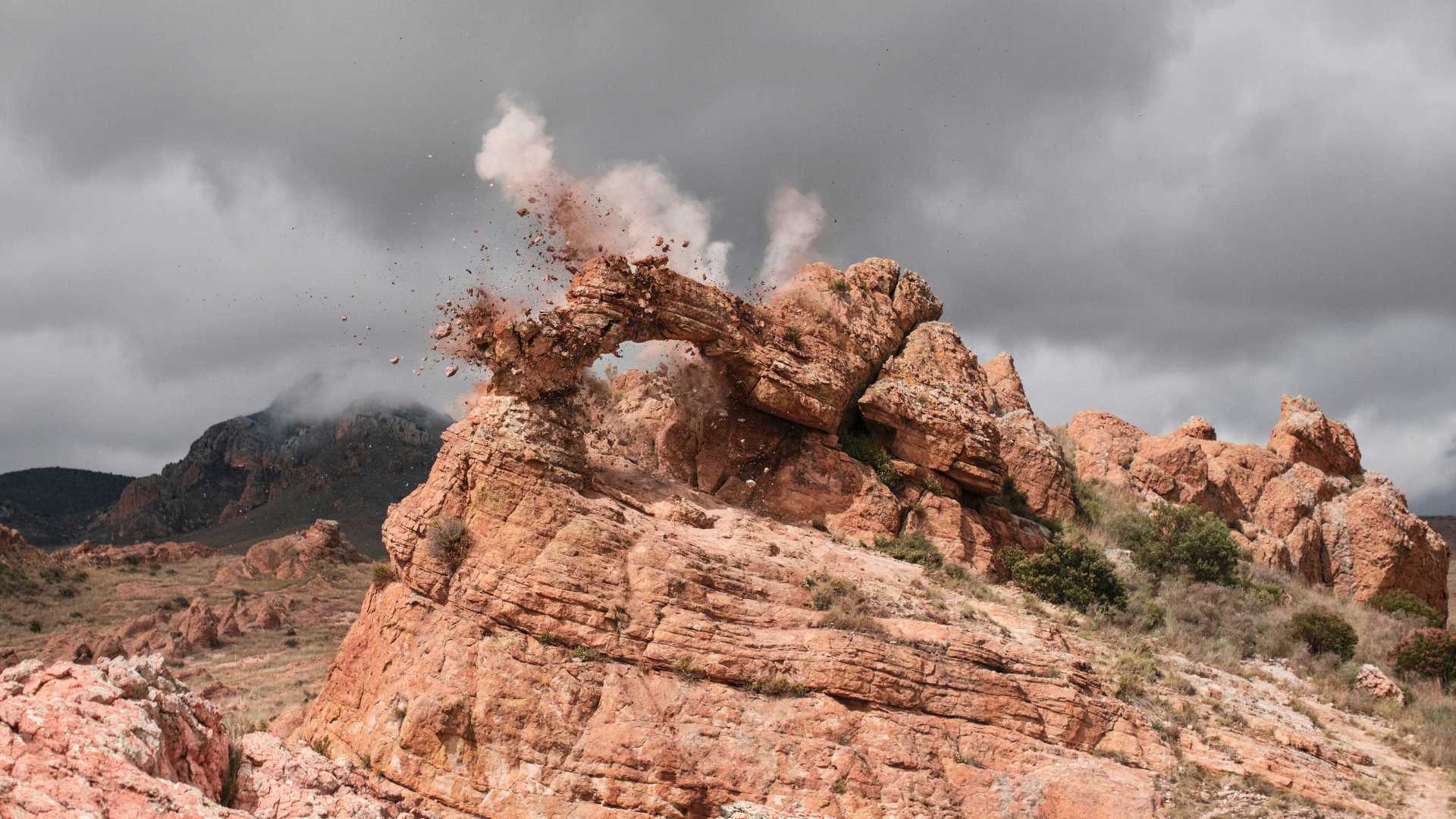
L’imbrication du passé, du présent et du futur est au cœur de la culture aborigène australienne. Cette vision du monde considère que les êtres humains ne sont pas séparés du vivant, mais qu’ils s’inscrivent dans un continuum de relations, d’interdépendances et de responsabilités.
Bien qu’inscrites dans un tout autre contexte culturel, deux expositions marquantes des artistes basés à Berlin Julian Charrière et Julius von Bismarck entrent, de manière inattendue, en résonance avec cette conception. À travers leurs œuvres, ils interrogent les grands dualismes – nature et culture, humain et non-humain, passé et futur – qui ont longtemps structuré la pensée occidentale.
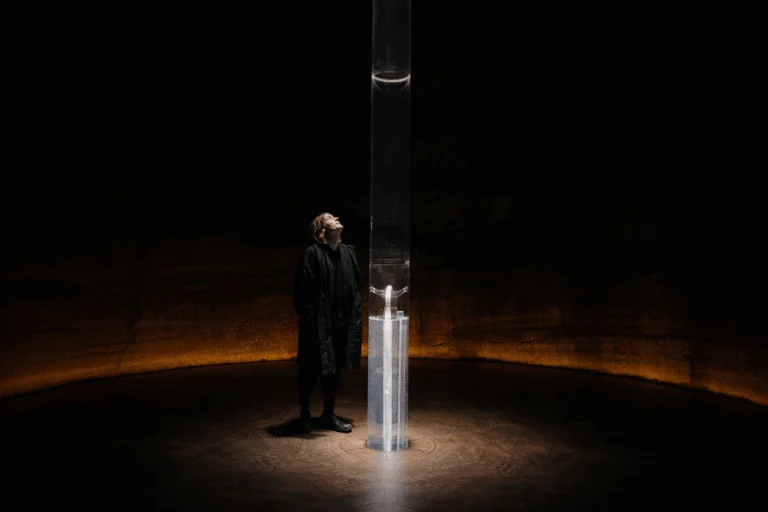
JULIAN CHARRIÈRE and ‘Breathe,’ 2026 at MONA in Tasmania. Photography by JESSE HUNNIFORD, courtesy of MONA. Copyright the artist; VG BILD-KUNST, Bonn, Germany. Courtesy the artist and MONA
L’exposition Hardcore de Charrière, au MONA à Hobart, a ouvert ses portes le 5 juin, tandis que This Is Not the Storm de Bismarck, à l’ACCA de Melbourne, a fermé ses portes le 14 juin. Découvertes ensemble au cours d’un périple à travers l’Australie, ces deux expositions apparaissaient comme des chapitres complémentaires d’une même réflexion.
Comptant parmi les artistes phares de leur génération, Charrière et Bismarck ont développé des pratiques situées à la croisée de l’écologie, de l’anthropologie et de la technologie. Pourtant, ni l’un ni l’autre n’illustrent la crise climatique ni ne prônent de solutions simplistes. Au contraire, ils examinent les contradictions qui définissent notre relation au monde vivant, en associant la recherche scientifique au mythe, l’expérimentation physique à l’imagination poétique, ainsi qu’un profond sentiment d’émerveillement face à la puissance et à la pérennité de la nature.
Les deux artistes partent de gestes d’une simplicité trompeuse. Dans Punishment (2012), Bismarck fouette la mer. Ce geste est ridicule, mais immédiatement reconnaissable : il incarne le fantasme tenace de l’humanité selon lequel la nature peut être disciplinée, contrôlée ou domptée.
L’œuvre de Julian Charrière, Buried Sunshines Burn (2024), propose un geste d’une tout autre nature. Tenter de faire fondre un iceberg à l’aide d’un chalumeau alimenté par des énergies fossiles est tout aussi vain, mais ce geste ne traduit plus une volonté de domination. Il exprime au contraire l’urgence d’agir, aussi modeste ou paradoxale cette action puisse-t-elle paraître. L’œuvre met ainsi en lumière une réalité troublante : même nos tentatives de réparer les dégâts environnementaux demeurent inextricablement liées à l’économie des énergies fossiles qui les a engendrés. Là où Julius von Bismarck met en scène l’illusion de la maîtrise, Julian Charrière révèle l’impossibilité de l’innocence.
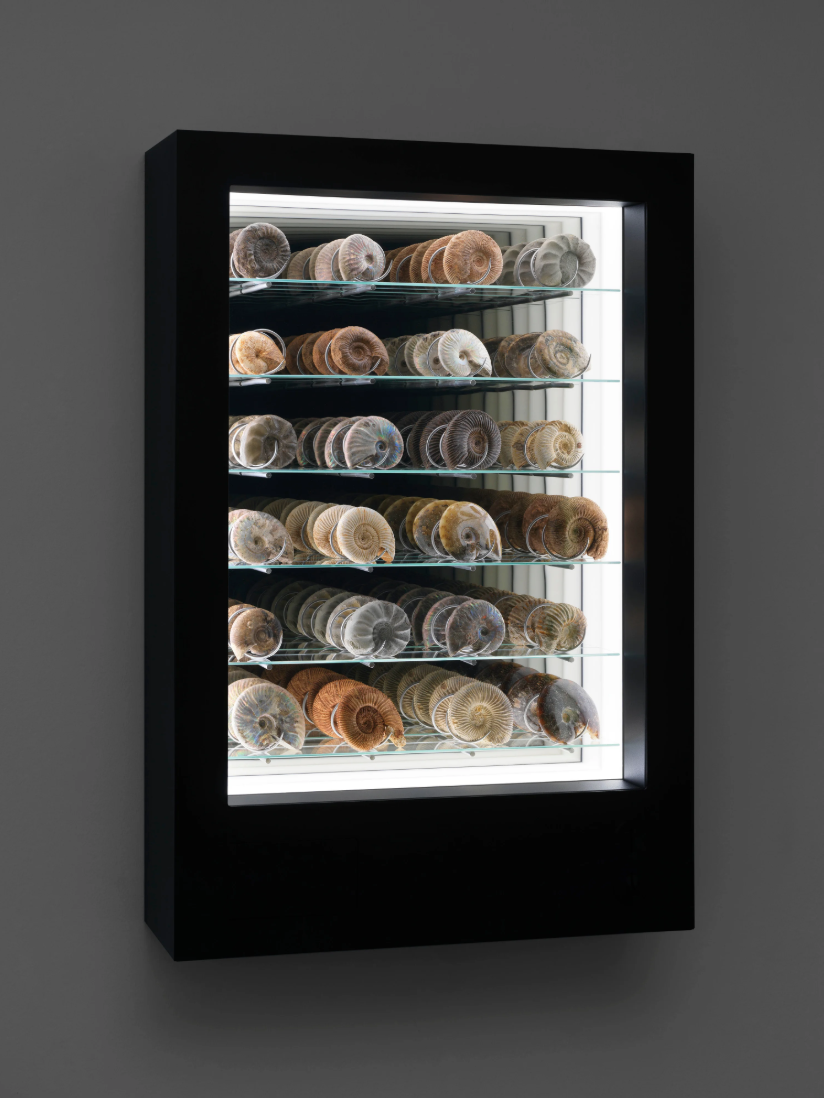
Julian Charrière, Spiral Economy, 2025.
Cette réflexion se prolonge dans Spiral Economy, où Julian Charrière détourne un distributeur automatique pour en faire un distributeur de fossiles. Le geste est empreint d’humour, mais sa portée n’en est pas moins saisissante. Les fossiles — témoins matériels des temps géologiques — deviennent des objets de consommation impulsive, à l’image des combustibles fossiles, eux aussi issus de processus qui s’étendent sur des millions d’années avant d’être extraits, consommés et épuisés en un temps dérisoire. Dans les deux cas, ce qui s’est formé au fil d’échelles temporelles immenses est ramené à la logique de la gratification immédiate. Rares sont les œuvres qui expriment avec autant de concision la collision entre le temps géologique et le court-termisme du capitalisme contemporain.
Les œuvres de Julian Charrière et Julius von Bismarck saisissent avec justesse l’un des paradoxes de notre époque. Nous sommes la première espèce capable de transformer les systèmes planétaires à l’échelle géologique, et pourtant nous continuons à répondre à cette crise par des gestes à la fois héroïques, absurdes, nécessaires et profondément insuffisants.
Les deux artistes confrontent également les visiteurs à des forces qui dépassent l’expérience humaine ordinaire. Dans Towards No Earthly Pole, Julian Charrière révèle l’immensité de la nuit arctique, tandis que The Storm de Julius von Bismarck nous plonge au cœur de la violence d’un ouragan déferlant sur un paysage urbain. Ces œuvres bouleversent notre perception des échelles de temps et d’espace, rappelant que l’histoire humaine s’inscrit dans des temporalités et des forces qui la dépassent largement.
Les questions de résilience et de transformation traversent l’ensemble des deux expositions. Julian Charrière y cryogénise une plante, nourrit des escargots avec le calcium de sculptures classiques en marbre et, dans Breathe, invite les visiteurs à respirer l’air libéré par un minerai ancien, formé lors de la première grande accumulation d’oxygène dans l’atmosphère terrestre, il y a environ 2,4 milliards d’années.
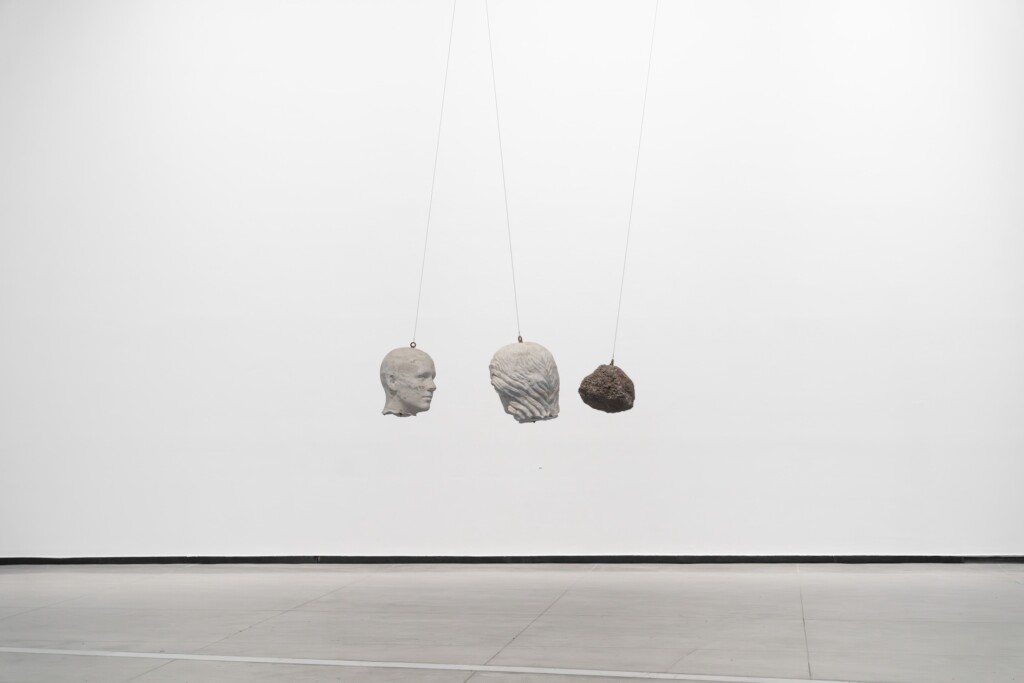
Two Heads with One Stone, 2026. Jesmonite sculptures, motorised sensors, rock dimensions variable. Installation view, « This is Not the Storm », commissioned by Australian Centre for Contemporary Art, Melbourne, 2026. Courtesy the artist; alexander levy, Sies + Höke, Esther Schipper.
Julius von Bismarck place une plante roulante sur un tapis roulant et met des têtes de marbre en mouvement perpétuel, où les collisions produisent lentement des fragments plutôt que des dénouements. Temps géologique, persistance du vivant et histoire humaine s’y entremêlent jusqu’à devenir indissociables.
La technologie occupe, elle aussi, une place délibérément ambiguë. Des hélicoptères animent les forêts alpines, des drones documentent des feux contrôlés, et une ingénierie de pointe rend possibles nombre des installations de Julian Charrière. Loin de chercher à se tenir à distance des systèmes technologiques impliqués dans la destruction écologique, les deux artistes choisissent de travailler avec eux et à travers eux. Ils refusent le confort d’une pureté morale illusoire et font de la contradiction elle-même la matière première de leur pratique.
C’est ce qui donne à ces deux expositions une résonance toute particulière aujourd’hui. Julian Charrière et Julius von Bismarck ne sont pas des militants écologistes déguisés en artistes ; ils sont des créateurs qui bousculent nos certitudes. Leurs œuvres mettent en lumière les ambiguïtés d’une époque où l’humanité est devenue une force géologique sans en mesurer pleinement les conséquences. Plutôt que de nous inviter à « aimer davantage la nature », ils nous amènent à repenser ce que signifie en faire partie. Ils déplacent ainsi le débat au-delà de la seule sensibilisation environnementale, ouvrant une réflexion plus profonde sur la coexistence, la responsabilité et la place de l’être humain au sein du monde vivant.
Par Frédéric de Goldschmidt
Cover: Julius von Bismarck and Julian Charrière, Grand Staircse Escalante, We Must Ask to Leave, 2018